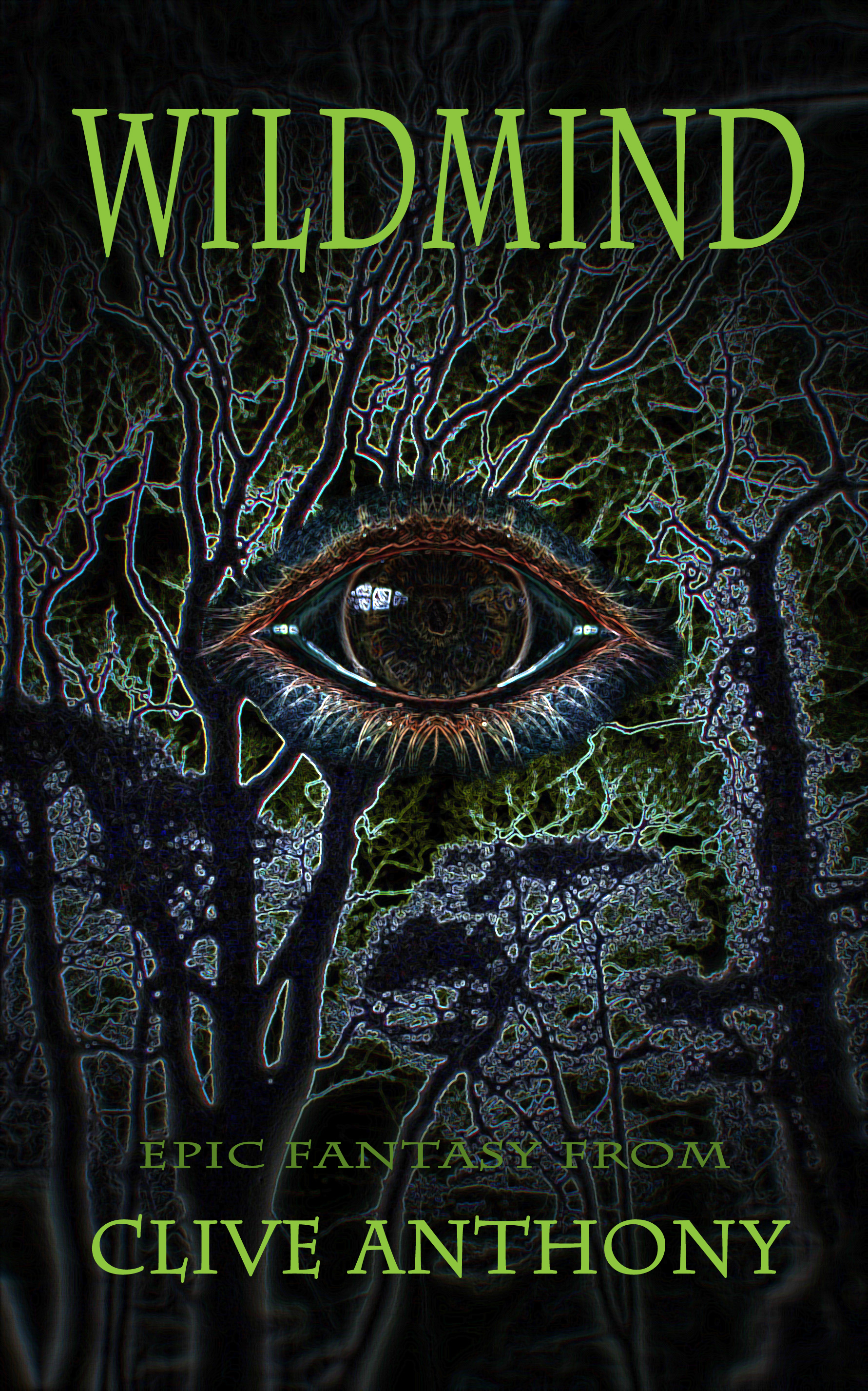
WILDMIND is now available in paperback as well as for Kindle, from Amazon.
WILDMIND is now available in paperback as well as for Kindle, from Amazon.
I’m a life-long Tolkien fan, but not one that bemoans the adaptations for the films – different perspectives can be stimulating.
So Oldest and Fatherless: The Terrible Secret of Tom Bombadil was really interesting – thanks to my son for drawing my attention to it.
I don’t agree with the interpretation of Tom Bombadil as an evil force and don’t think Tolkien intended this either (nor does the writer). I saw Bombadil as a wild force, completely unconcerned with other people, and to be honest I didn’t really miss him in the films. But fantasy is about ‘what-ifs?’ and this post develops one of the great ‘what-ifs?’ of all time (Lord of the Rings) along a new direction (for me at least). It’s intriguing to consider this speculation and the comments it generated. And though I’m not convinced, it is a clever and very convincing argument.
Imagine what it would be like to discuss this with Tolkien himself over a pint of beer whilst sitting in front of a log fire…
I saw an old lady knocked over by a car today. It was frightening seeing just how frail people can be. And inspiring that so many people rushed to her aid -no hesitation and nothing else mattered to them until she was taken care of. But it was despicable that the driver could be so careless as to cause such harm, and so callous after the event.
Why is this relevant here? Writers need characters to write about. I draw inspiration for my characters from real people I come across and from fictional ones. Also, fantasy tales usually deal with the good versus evil argument – absolute or shades of grey?
She lay on the road bleeding as people rushed to her, others calling for emergency help. An ambulance arrived quickly and the paramedic was amazing. He treated her as he assessed the situation, directed everyone, reassured the lady and much more, all at the same time and all in a perfectly calm and controlled manner.
She didn’t fall far, the impact with the car was slight, but roads are hard. I heard only recently on the radio, health professionals talking about the fragility of the human head, despite our apparently hard skulls. We carry our brains high enough above the ground that simply an uncontrolled fall can be deadly. Bleeding but conscious and in such good hands, I hope the lady makes a full recovery. She obviously suffered some indignity in all this and I will refrain from writing about her any further.
Why was the driver careless? In a word anger. He was angry that he was blocked in, sounding his horn repeatedly and then reversing angrily. Why callous? It’s hard to understand. Perhaps the reality of what he had done had not even begun to filter into his mind when he got out of his car. He stepped straight over the fallen woman to shout that we should all be blaming the man who blocked him in, that’s whose fault it was. His shockingly misguided reaction made me angry, and others, but our focus was on the poor woman on the ground so we told him to calm down and get out of the way. Paramedics are rightly cautious with head injuries and they take their time. It was a good five minutes before the car driver came back and asked how she was.
Careless and stupid, or callous and despicable. Who am I to judge? A fellow human – is it not human to care for others? So we all judged who saw the incident, but I don’t know the man, he may have been in a hurry to help someone, maybe he tirelessly works for a children’s charity. Good or bad is rarely clear and obvious, good people do bad things and vice versa. However, we can only judge people by their actions and those seemed very clear. At least there were plenty of witnesses speaking to the Police when they arrived and opinions were very clear.
Is it this mind-filling and focus-narrowing anger that is behind other crimes? You can imagine it may be responsible for hit and run drivers, furiously blaming their victims for being carelessly in the way as they speed off.
It would be easy to find all this depressing, but remember the context: one stupid man amid dozens of other people all caring and all immediately doing the right thing.
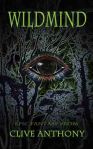 I have updated the free samples of Wildmind available – here, or use the menus at the top of the page.
The Prologue was already posted.
Now the Complete Chapter 1 is available on this site to read.
Meet Commander Varik Tojen as he directs the defence of Castle Hurriden.

I have also added the complete Chapter 2.
Back in Espondre, the capital city, we meet Mal Respler, an unhappy and timid bureaucrat. Not yet touched by the invasion, he has no idea about the personal and world-changing events coming his way….
The full story is available for only
£1.75 Amazon UK
$2.99 Amazon US
Inspiring on two levels, this article by David Mitchell in the Guardian was both brilliantly written and raised some really interesting points.
Not about the card game bridge, but about honesty. You can extrapolate that to the age old good and bad decisions and actions. I’d like to think that when a moral decision is called for I choose good because it is the right thing to do. But is that really true – I don’t know that I’ve really been tested in that respect. And what about everyone else? Putting aside those that make the ‘bad’ choices, do people do the right thing for moral reasons, or because they don’t want to deal with the guilt, or because they fear discovery and punishment (or divine judgement).
“The rare occasions when I’ve broken
rules or laws led to traumatic breaches in my peace of mind. It’s a frailty of gumption that, luckily for me, shares the symptoms of a moral compass.”
That’s an honest and humble opinion by David Mitchell and I suspect this would apply to more of us than would readily admit it. Perhaps it is about evolution, we couldn’t live in such busy and highly populated societies if everyone made the decisions that only favoured themselves, taking no heed of consequences for others. David has a much better way of saying that though:
“Honesty is very convenient – and that’s probably why most of us are mostly honest most of the time. Society functions more smoothly if the statistical risk of being misinformed, robbed, ripped off or murdered in any given situation remains low. The fact that most people realise this is a felicitous confluence of common sense and laziness – as much a victory of apathy over enterprise as it is of righteousness over sin.”
All good thought provoking stuff to inspire writers….
Watch a team try to beat the record for building the Lego death star, all in aid of charity of course!
Interesting to see this article in the Guardian recently by Anne T Donahue, commenting about the recent trend on TV for shocking plot twists, generally involving the deaths of main characters. (Some spoiler here).
Some extremely popular shows are mentioned but there seems to be no doubt that the standard has been set by Game of Thrones, particularly (but not only) with the amazing Red Wedding scene.
“Television’s long, drawn-out narratives used to offer a false sense of comfort against the big beats of two-hour movies. Now, shocking twists are necessary ways of driving the action.”
That’s a comment about TV in 2014 compared with an example from  a book published in 1996. Well OK it’s about the current and excellent TV adaptation, but that is of course based on George RR Martin’s A Song of Ice and Fire novels. If you have read them you will know that this is just one element of what makes them great, the shock twists are but a part of a much broader realism and complexity.
In all the books I have ever read, the Red Wedding scene has not been surpassed – it would be hard to do so!

Today is Tolkien reading Day!
The Tolkien Society says
“Tolkien Reading Day is an international event held on 25 March – the day of the destruction of the One Ring – each year. It is held to promote interest in the life and works of J.R.R. Tolkien, with many local groups putting on events at local library and book-stores.”
Reading The Lord of the Rings (the first time) as a young teenager was inspirational – it had a lasting effect that is still with me now (a few years on, let’s not be too specific). Reading, writing, nature, nobility of spirit, morality, strength of character – all hugely important aspects of life Tolkien touches still, long after he left us.
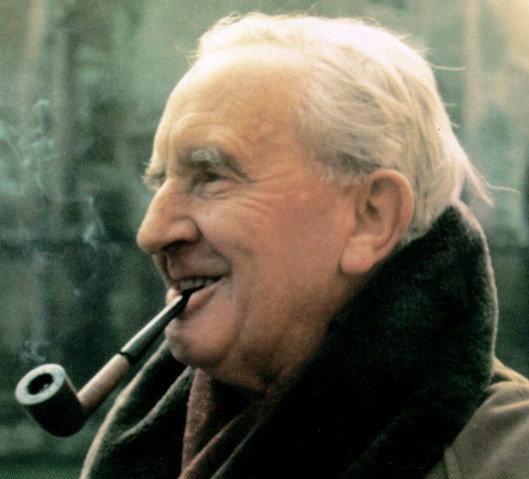
I love that the theme this year according to the Society is ‘hope‘ (I missed that above). He managed to take his characters and readers to places of such despair – but there was always hope that somehow shined through.
Wildmind is reduced now to
£0.99 on Amazon UK
and $1.63 on Amazon.com
A Kindle Countdown Deal is on now, but it is time limited so don’t miss the opportunity to buy at 75% discount!
 Ever noticed a speculative element in a book being treated in a cursory manner, or not taken too seriously? I have and it’s a problem for me. Fantasy and science fiction books are my favourite reads and are hugely popular with many – but obviously are not to everyone’s taste. So is it good news when a mainstream author dabbles in fantasy or sci-fi? In theory yes, for example bringing some wider audiences along and reducing the stigma, but in practice I’d say it doesn’t always work.
For me when an author doesn’t take the fantasy element seriously enough it can damage the story’s credibility overall. Credibility in fantasy? Absolutely – I would say it is even more important than in contemporary fiction. Fantasy is a medium for what-ifs, but that doesn’t work if the characters are not believable, or if the make-believe world is poorly imagined. For example you might say it is relatively easy to set any story in a dystopian world to give it a twist, but is it so straightforward? I loved Ursula K Le Guin’s recent review in the Guardian (On Such a Full Sea by Chang-rae Lee) where she addressed this issue excellently. Although I haven’t read the book she reviewed, I found myself cheering as I read her words.

Contrast this dabbling with the skilful writing of China Miéville for example. He is able to hop genres and craft fantasy that if you described it out of context would sound preposterously unbelievable. And yet he achieves highly credible and thoroughly engaging stories. I found that giant moth creatures sucking out sentience from people was highly believable, because they were embedded in a great story and written in a way that made you somehow unable to doubt it.
Tolkien was a master of course – everyone knows Middle Earth exists.
Stephen King is another example, topiary hedge creatures moving when you aren’t looking – absurd mentioned here and yet in The Shining it becomes chilling. Oh and Peter V Brett convinced me that demons rise at night, I had no time to doubt it in a such a believable world filled with scintillating action scenes.
So inspired by these examples I have a plea in two parts:
Let’s take fantasy seriously
P.S.
I’ve deliberately avoided negative examples above (apologies to Chang-rae Lee) but would love to hear more positive examples of authors who make you believe irrational things….
 CLIVE ANTHONY